Chinese Timekeeping
Finding a clan genealogy (often called a jiāpǔ 家譜 or zúpǔ 族譜) unlocks a treasure trove of information about your family. One amazing piece of information that is sometimes included is the time of birth or death of an individual. In ancient China, the year, month, day, and hour of birth (know as the Four Pillars of Destiny) are used for a number of calculations, such as selecting auspicious dates for events and marriage compatibility. Thus this information was often carefully recorded.
Every increment of time was originally assigned special characters corresponding to the Heavenly Stems and Earthly Branches, from years to days of the week to hours of the day all the way down to quarters of the hour (source). Since the Four Pillars didn’t require that level of specificity and the lunisolar calendar allowed the recording of month and day using number characters, the special characters (heavenly stems and earthly branches) were mostly used for the year and the hours of the day.
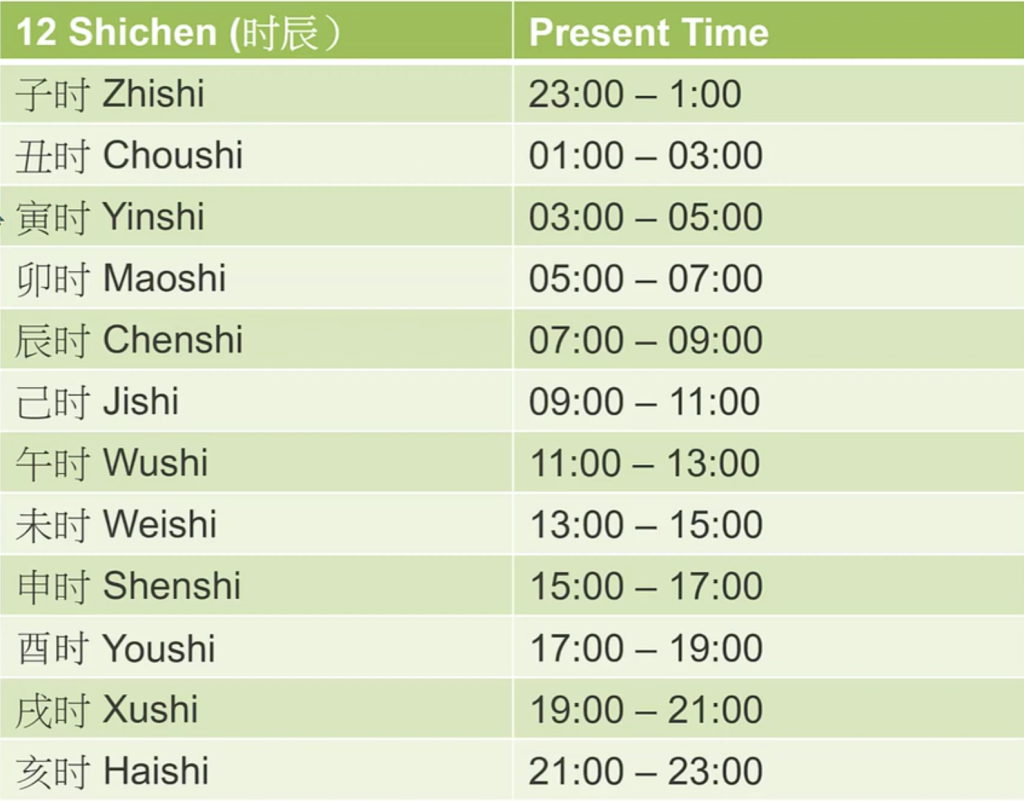
The day is traditionally divided up into two-hour increments, labeled with the 12 Earthly Branches characters. Occasionally, you may see jíshí 吉時 (or 吉时) written, which means ‘an auspicious time’. Typically this is written when the exact hour wasn’t recorded.
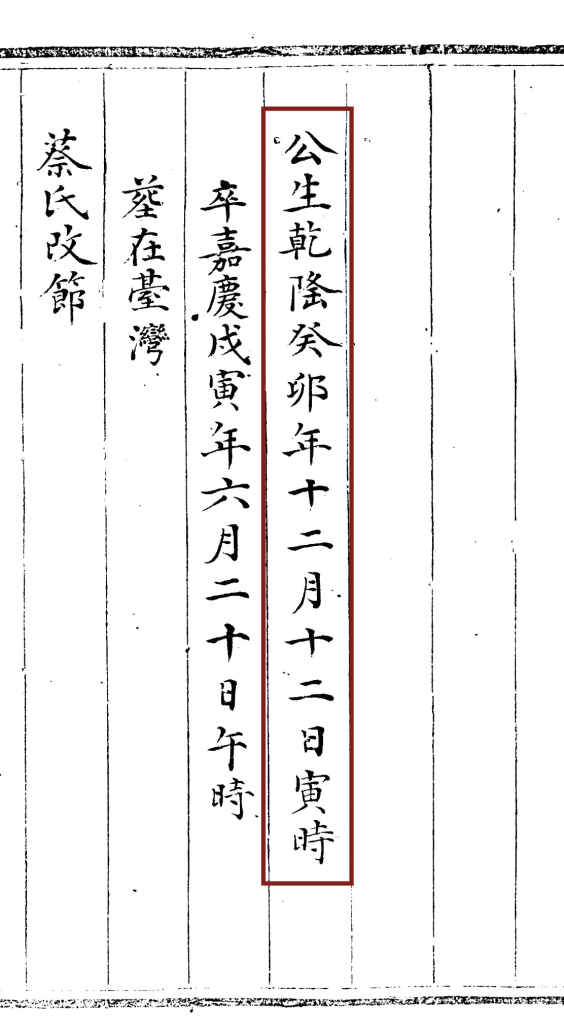
Let’s look at an example.
The text to the left highlighted in red says the following:
公生乾隆癸卯年十二月十二日寅時
This can be broken down as follows:
公生 means “He (was) born”
乾隆癸卯年 means Emperor Qianlong in his Guimao year of reign (1783 – see here to learn about year designations)
十二月 means the twelfth lunar month
十二日 means the 12th day
寅時 means between 3:00 AM and 5:00 AM (using the table above)
If the records you find do not use the Earthly Branches to indicate time, there is an alternative set of designations based on what typically happens during those two hours, such sunrise or dusk. You can see a table with this set of characters here.